

Production & Operations
Leading the smart manufacturing revolution

Engineer the Factories of Tomorrow
The Production and Operations sector is being reshaped by digitalization, sustainability, and hyper-competition. Today’s production leaders must do more than optimize processes. They must architect resilient, data-driven, and future-ready ecosystems.
At HECTOR School, we combine cutting-edge research with industry-relevant education to prepare professionals for the challenges of tomorrow’s manufacturing landscape.
What Is Transforming Production & Operations?
The industry is shifting from isolated, manual processes to interconnected, autonomous, and sustainable systems.
Core drivers of change:
- Industry 4.0 & Smart Manufacturing: AI, IoT, and cyber-physical systems are revolutionizing production processes
- Supply Chain Digitization: Advances in IoT, big data, and AI are transforming logistics into predictive, autonomous networks
- Sustainability & Circularity: Eco-efficient production, circular economy principles, and carbon-neutral operations are becoming mandatory
- Globalization & Resilience: Distributed manufacturing networks and localized production are replacing centralized models
- Regulatory & Ethical Pressures: Evolving global standards in emissions and labor are mandating adaptive compliance strategies and ethical business practices
The Challenges Leaders Need to Solve
Modern production and operations leaders must navigate a complex landscape of technological, operational, and strategic challenges. Success requires a blend of innovation, systems thinking, and execution excellence.
Core challenges:
- Legacy vs. Innovation: Modernizing outdated systems without disrupting ongoing operations
- Supply Chain Disruptions: Managing global networks’ volatility while ensuring resilience and cost efficiency
- Data-Driven Decisions: Turning vast amounts of data into actionable insights with AI and prescriptive analytics
- Sustainability Compliance: Meeting carbon neutrality goals while maintaining profitability and market competitiveness
- Talent & Skills Gap: Upskilling teams to handle Industry 4.0, autonomous systems, and digital tools to drive innovation
- Regulatory Adaptation: Adapting to evolving safety, emissions, and labor laws worldwide
Production Expertise at KIT
Karlsruhe Institute of Technology (KIT) is a leader in production research, specializing in Industry 4.0, AI, and sustainable operations. From smart factories to autonomous logistics, KIT is pioneering the future of manufacturing.
Areas of KIT research excellence:
- Smart Manufacturing & Industry 4.0: Developing AI-driven process optimization, digital twins, and cyber-physical systems
- Supply Chain Intelligence: Using prescriptive analytics and logistics to design resilient, efficient networks
- Sustainable Production: Pioneering carbon-neutral manufacturing, circular economy models, and eco-efficient processes
- AI & Autonomous Systems: Enabling predictive maintenance, anomaly detection, and autonomous logistics through advanced algorithms and robotics
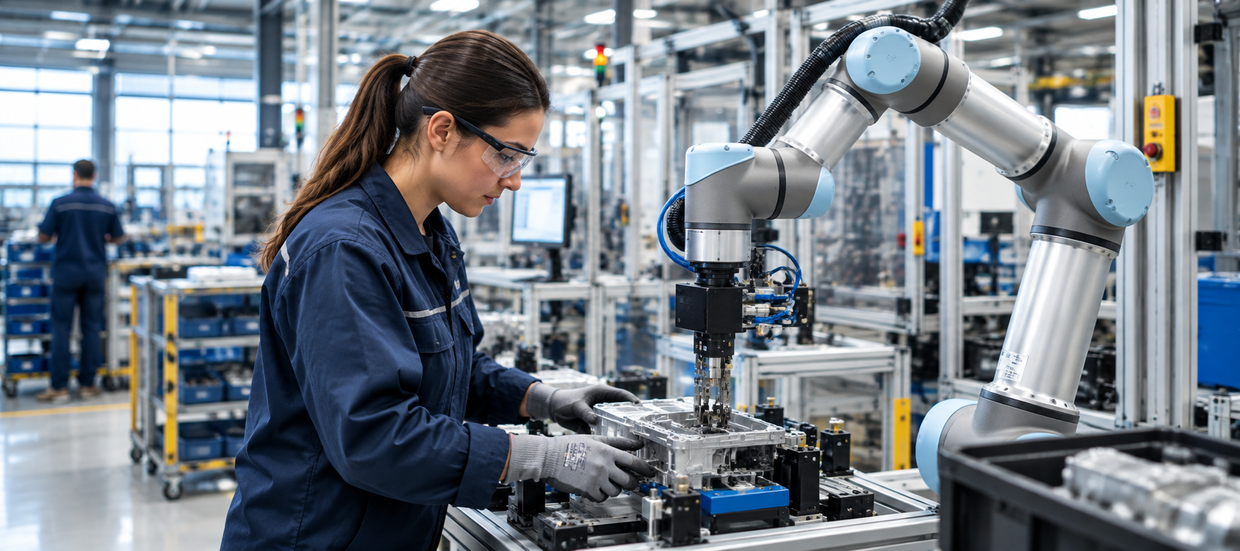
- Robotics & Human-Machine Collaboration: Advancing collaborative robotics to merge human expertise with machine precision in production
- Virtual Engineering: Creating digital continuity from CAD to AI-driven simulation and optimization
KIT infrastructure:
- State-of-the-art labs for smart manufacturing and robotics
- Collaborations with industry leaders and research consortia
- Involvement in EU and national initiatives
- Access to supercomputing and AI infrastructure at the Scientific Computing Center (SCC)
Learn from the Experts
The HECTOR School faculty includes KIT’s top researchers and industry leaders, all driving the future of production.
 |
Prof. Dr.-Ing. Kai Furmans, Head of Institute for Material Handling and Logistics (IFL) at KIT
Program Director Production and Operations Management
Research areas:
Roles/Experience:
Listen to Prof. Furmans statement on YouTube. |



From Research to the Classroom
What you learn at HECTOR School is not just textbook knowledge. It's directly derived from KIT research and shaped by real industry needs.
- Research-Driven Curriculum: Programs are co-developed with KIT researchers and updated continuously to reflect industry trends
- Industry-Relevant Projects: Case studies and lab work address challenges in smart manufacturing, supply chain optimization, and AI-driven operations
- Hands-On Learning: Participants work with digital twins, prescriptive analytics, and robotics platforms
- From Knowledge to Impact: Graduates apply what they learn immediately in their professional roles
Build Your Expertise in Production & Operations
Whether you’re a production manager, engineer, or operations leader — HECTOR School offers tailored programs to help you excel in modern manufacturing.
Part-time M.Sc. programs for engineers aiming for leadership roles in production and operations management.
M.Sc. Production and Operations ManagementShort, intensive courses on specific production and operations topics, ideal for upskilling or continuing education.
Production & Operations Certificate CoursesTailor-made training solutions for companies — from small-team programs to full corporate academies.
Corporate Programs