

Energy Storage: Batteries and Fuel Cells
Certificate Course - Mobility Systems Engineering - MSE.4EM.5.I26
| Date | Jul 20 - 22, 2027 |
| Duration | 3 days |
| Location | On campus - Karlsruhe |
| Language | English |
| ECTS | upon request |
| Cost | 2,050€ |

Fundamentals
Covers thermodynamics and electrochemistry fundamentals, transport and reaction losses, and core principles behind batteries and fuel cells for energy conversion.
Technology
Explains fuel cell structure and operation, electrical characterization and modeling; introduces high energy battery chemistries and performance drivers incl. power density.
Applications
Discusses mobility and stationary use cases, from low temperature fuel cells in EVs to high temperature cells for decentralized power, and battery modeling for design.
What You'll Explore
- Fundamentals of thermodynamics and electrochemistry for energy conversion
- Loss mechanisms in transport and electrochemical reaction processes
- Fuel cells: structure, operating principles, electrical characterization and modeling
- Applications: low-temperature FCs for EVs, high-temperature FCs for decentralized power
- Electrochemical energy storage: high‑energy batteries (e.g., Li‑ion, Na‑NiCl), performance and power density
- Electrical characterization and modeling of batteries for design and evaluation
Your Key Takeaways
Participants
- Understand thermodynamic and electrochemical foundations relevant to batteries and fuel cells.
- Explain fuel cell structure, operation, and key modeling/characterization approaches.
- Identify major high‑energy battery chemistries and drivers of energy/power performance.
- Apply electrical characterization and modeling techniques to assess batteries.
- Evaluate application suitability for mobility and stationary energy systems.
Taught by Recognized Experts in Energy Storage
Benefit from the knowledge of leading specialists with extensive experience in research and industry. Their deep expertise guarantees a course of outstanding academic and practical quality.
Prof. Dr. Helmut Ehrenberg
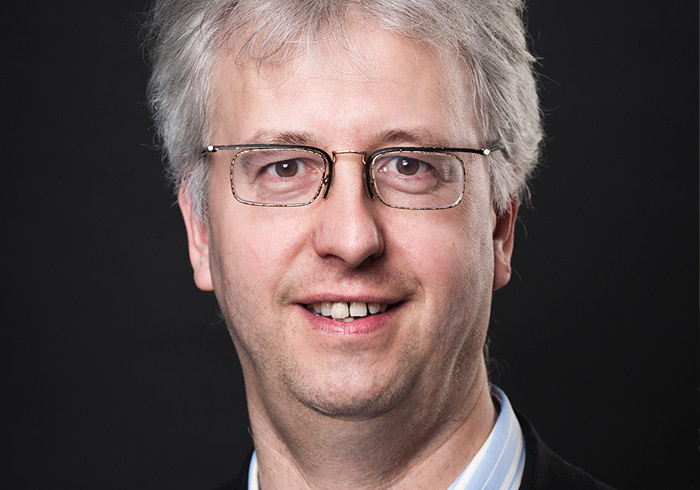
Prof. Dr. Helmut Ehrenberg is a materials scientist at the Karlsruhe Institute of Technology (KIT) and head of the Institute for Applied Materials – Energy Storage Systems (IAM-ESS). His research focuses on solid-state chemistry and electrochemical energy storage, especially lithium-ion and solid-state batteries. He studied chemistry, earned his PhD in solid-state chemistry, and has held leading roles in large-scale battery research projects bridging fundamental materials science and applied energy storage technologies.
Dr. Frieder Scheiba

Dr. Frieder Scheiba is a scientist at the Karlsruhe Institute of Technology, serving as section head at the Institute for Applied Materials (IAM-ESS). His research focuses on carbon-based materials and electrochemical energy storage, including batteries and redox-flow systems. He is involved in multiple large-scale energy projects and has authored numerous publications on electrochemical materials and processes.
Who Should Attend
- Engineers and technical professionals working on batteries, fuel cells, and electrochemical energy systems.
- R&D specialists and system integrators evaluating storage technologies for EVs and stationary applications.
- Project managers and consultants seeking a concise, application‑oriented understanding of characterization and modeling.
- Researchers and early‑career academics in electrochemistry and energy storage.
About HECTOR School
HECTOR School, the Technology Business School of the Karlsruhe Institute of Technology (KIT), is a leading provider of executive education in technology-driven fields.
For this course, participants who successfully complete the examination can earn a KIT certificate with ECTS credits, which may be credited toward our Executive Master of Science or Advanced Studies Programs, subject to content alignment.