

Energy Markets
Certificate Course - Energy Engineering - EE.5.1.I26
| Date | Oct 25 - 26, 2027 | Oct 23 - 24, 2028 |
| Duration | 2 days |
| Location | On campus - Karlsruhe |
| Language | English |
| ECTS | Upon request |
| Cost | 1,550 € |

What You´ll Explore
-
Liberalization of energy markets.
-
The power market and the corresponding submarkets (Wholesale spot market, Intraday market, Forwards and futures markets, Emission rights market, Markets for ancillary services).
-
Pricing and investments in liberalized power markets.
-
Risk management.
-
Market power.
Your Key Takeaways
Participants
-
Gain knowledge of the development of the liberalization in the energy market.
-
Get to know wholesale markets for electricity.
-
Understand the markets for emission allowances.
-
Gain insights into various products such as Forwards and Futures, Re-serve energy markets and markets for transmission rights.
-
Understand the principles of risk management in energy markets.
Taught by Recognized Experts in Energy Markets
Benefit from the knowledge of leading specialists with extensive experience in research and industry. Their deep expertise guarantees a course of outstanding academic and practical quality.
Prof. Dr. Dogan Keles
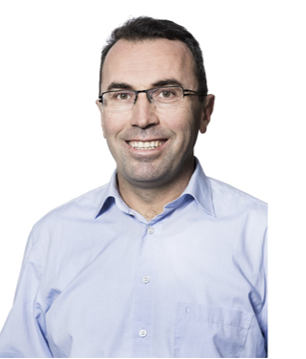
Prof. Dr. Dogan Keles is Professor of Energy Markets and Finance and Head of Section at the Department of Technology, Management and Economics at DTU. His research focuses on energy markets, climate and energy policy, and the economic transformation of sustainable energy systems. He analyzes market dynamics, investment strategies, and regulatory frameworks shaping the global energy transition. With a PhD in Economics and a background in Industrial Engineering and Management, he combines quantitative modeling with policy-relevant insights to support efficient, resilient, and sustainable energy systems aligned with global climate goals.

Dr. Massimo Genoese
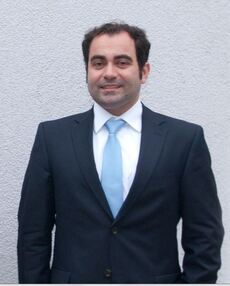
Dr. Massimo Genoese is affiliated with the Chair of Energy Economics. He leads research in energy market modelling and analysis, focusing on electricity markets, capacity mechanisms, renewable integration, and agent-based simulation of power systems. His work combines academic research and applied modelling for energy system analysis, market design, and policy evaluation, and he has authored numerous publications on electricity market dynamics and energy economics.
Who Should Attend
This certificate course is designed for professionals seeking a structured introduction to the integration of energy systems and e-mobility within the context of sustainable energy transition.
- Engineers and technical professionals in the energy, automotive, electrical, and manufacturing industries who are involved in or preparing for projects related to e-mobility, charging infrastructure, and integrated energy systems
- Energy consultants, planners, and project managers working on renewable energy integration, smart charging solutions, and sector coupling strategies
- Professionals in utilities, grid operation, transportation, and infrastructure sectors seeking to understand the interaction between electric mobility, energy efficiency, and modern power systems
- Experts in sustainability, mobility, and public administration who need a solid technical and economic understanding of e-mobility integration and its impact on energy networks and climate goals
- Researchers and academics aiming to deepen their knowledge of energy efficiency methodologies, electric mobility systems, and current research trends in integrated energy solutions
- Professionals who want a coherent overview from the fundamentals of energy system integration to practical applications, evaluation methods, and the opportunities and challenges of large-scale e-mobility deployment