

Smart Grids and Emerging Technologies
Certificate Course - Energy Engineering - EE.4.4.I26
| Date | Jul 16 - 21, 2027 | Jul 7 - 12, 2028 |
| Duration | 4 days |
| Location | on campus - Karlsruhe |
| Language | English |
| ECTS | upon request |
| Costs | 2,400 € |

Course prerequisites - Some knowledge of electrical power systems and of some fundamentals of information and communication technology is helpful. Participation in course Components of Power System and Transmission and Distribution is desirable, but not a prerequisite.
Fundamentals
Introduces smart grid principles, energy transition basics, and integration of renewable energy with distributed generation and storage.
Technology
Covers smart grid technologies including digital communication, automation, AI, IoT, energy storage, and e-mobility.
Applications
Examines real-world impacts on efficiency, reliability, resilience, policy, sustainability, and possible field trips.
What You´ll Explore
SMART GRIDS: The course will give an overview of current and anticipated future approaches to the distribution and management of electrical energy and on the particular aspects of integrating the batteries of an increasing number of electrical vehicles into the power system.
-
The following topics will be covered (tentative)
-
Fundamentals of Smart Grids and Information & Communication Technology (ICT) in Energy Systems
-
Framework: Smart Grid Architecture Model (SGAM)
-
Energy System Services: System Control, Grid Automation, Ancillary Services and Energy Flexibility
-
Energy Transition: Electricity, Mobility & Heat Transition
-
Electricity Markets and Energy Tariffs
-
Distributed Energy Generation & Storage
-
Smart Metering, Communication Infrastructure and IT Security
-
Energy Management in Smart Homes & Smart Buildings
-
Demand Response (DR) and Demand Side Management (DSM)
-
Impact of E-Mobility on Smart Grids
EMERGING TECHNOLOGIES:
-
Fundamentals of Innovation, Emerging Technologies and Hype Cycles
-
Concepts, Hypotheses and Visions: Energy Ladder, All Electric Society, Hydrogen Ladder
-
Impact of Transformation on Companies
-
Example: Electric Mobility – Battery Electric Vehicles (BEV) and Fuel Cell Electric Vehicles (FCEV)
-
Example: High-voltage Battery Technology – Battery Cells & Manufacturing
-
Example: Artificial Intelligence (AI) in Smart Grids
Your Key Takeaways
The course enables participants to deepen their knowledge and skills in the following areas:
-
Fundamentals of smart grids and innovation, emerging technologies & hypes in energy technology.
-
Challenges & opportunities of integrating renewable energy sources into smart grids.
-
Role of digital information & communication technologies (ICT) in energy systems.
-
Emerging technologies shaping the energy sector.
By the end of this course, participants will be able to:
-
Apply critical thinking to practical examples of smart grid and emerging technology adoption across different regions.
-
Reflect on how innovations contribute to sustainability, resilience, and the transition toward a low-carbon future.
-
Develop a forward-looking perspective on technological innovation and evaluate societal, environmental, and policy dimensions.
Taught by Recognized Experts in Smart Grids and Emerging Technologies
Benefit from the knowledge of leading specialists with extensive experience in research and industry. Their deep expertise guarantees a course of outstanding academic and practical quality
Dr.-Ing. Ingo Mauser
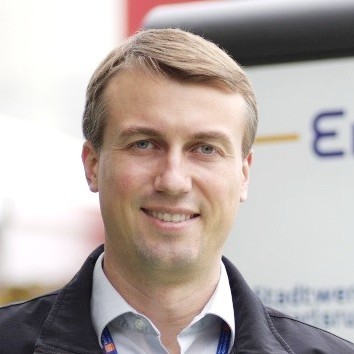
Dr.-Ing. Ingo Mauser is an energy systems expert at EnBW in Karlsruhe, where he leads projects in home energy management, flexibility, and energy-related platforms. His work focuses on smart home technologies, PV storage, e-mobility, heat pumps, connectivity, and standardization. Previously, he conducted research at KIT on future energy systems and building energy management. He holds a doctorate in Applied Computer Science from KIT and combines industry expertise with a strong research background.
Dr.-Ing. Marc Eller

Dr.- Ing. Marco Eller is Project Lead for prototype battery systems and vehicles at Mercedes-Benz AG, specializing in advanced electric mobility and next-generation battery technologies. With a PhD from Karlsruhe Institute of Technology (KIT), he combines academic research with industry innovation in electrified powertrains and systems engineering. His career includes leading roles in battery pre-development and prototype programs such as EQXX and solid-state battery concepts. As founder and CEO of HSUDL he bridges industry, entrepreneurship, and education. His work focuses on shaping sustainable, high-performance vehicle technologies for the future of mobility.
Who Should Attend
This certificate course is designed for professionals seeking a structured introduction to smart grids and emerging technologies shaping the future of energy systems.
- Engineers and technical professionals in the energy, electrical, ICT, and manufacturing industries who are involved in or preparing for smart grid, renewable integration, or grid automation projects
- Energy consultants, planners, and project managers working on energy transition strategies, digital energy solutions, and the implementation of smart grid technologies
- Professionals in utilities, transmission and distribution system operators, and infrastructure companies seeking to understand distributed energy generation, storage, demand response, and grid flexibility
- Experts in e-mobility, smart buildings, and industrial energy management who need to assess the impact of electric vehicles, energy storage, and intelligent control systems on modern power networks
- Specialists in energy policy, regulation, and public administration who require a solid technical and economic understanding of smart grids, electricity markets, and emerging energy technologies
- Researchers, academics, and innovation managers aiming to deepen their knowledge of AI, IoT, digital communication, and other emerging technologies transforming the energy sector