

Mobile Perception Systems
Certificate Course - Mobility Systems Engineering - MSE.4AD.3.I26
| Date | Jul 16 - 19, 2027 |
| Duration | 2 days |
| Location | On campus - Karlsruhe |
| Language | English |
| ECTS | upon request |
| Cost | 1,550€ |

Fundamentals
Explains the importance of perception for safety, comfort, and efficiency; introduces fundamentals of radar, lidar, and vision sensing for mobile machines.
Technology
Covers sensor principles and characteristics, with a focus on optical sensing: image acquisition, perspective projection, and 3D reconstruction from mono/stereo.
Applications
Provides an overview of scene perception methods, quantification of uncertainties, and applications in driver assistance and automated driving.
What You'll Explore
- Principles, strengths, and limitations of radar, lidar, and video sensors
- Optical sensing focus: image acquisition and perspective projection
- Scene reconstruction from mono- and stereoscopic camera systems
- Methods to extract navigation-relevant information from images
- Assessing and quantifying uncertainties in scene representation
- Outlook to applications in ADAS and automated driving
Your Key Takeaways
Participants
- Understand radar, lidar, and vision sensor principles for mobile perception.
- Know fundamental methods for scene reconstruction and navigation cues.
- Can assess and quantify uncertainties in perceived scene representations.
- Gain first hands-on experience through exercises and demonstrations.
- Recognize application contexts in ADAS and automated driving.
Taught by Recognized Experts in Mobile Perception Systems
Benefit from the knowledge of leading specialists with extensive experience in research and industry. Their deep expertise guarantees a course of outstanding academic and practical quality.
Prof. Dr.-Ing. Christoph Stiller
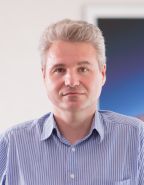
Prof. Dr.-Ing. Christoph Stiller is Director of the Institute of Measurement and Control Systems at Karlsruhe Institute of Technology (KIT). His research focuses on advanced measurement and control engineering with an emphasis on probabilistic methods, estimation theory, and intelligent system design. He develops innovative approaches for reliable and precise system control in complex technical environments. In addition to his research leadership, he teaches courses in measurement and control systems, contributing to the education of future engineers. His work bridges fundamental theory and practical applications in modern control engineering.
Who Should Attend
This course is ideal for:
- Engineers and researchers in perception for ADAS and automated driving.
- Systems and software engineers working on sensing and scene understanding.
- Test and development teams evaluating sensor characteristics and uncertainty.
- Early‑career professionals seeking fundamentals in mobile perception.
About HECTOR School
HECTOR School, the Technology Business School of the Karlsruhe Institute of Technology (KIT), is a leading provider of executive education in technology-driven fields.
For this course, participants who successfully complete the examination can earn a KIT certificate with ECTS credits, which may be credited toward our Executive Master of Science or Advanced Studies Programs, subject to content alignment.