

Co2-Balances: Well to wheel
Certificate Course - Mobility Systems Engineering - MSE.3.EM3.I26
| Date | Jun 4 - 7, 2027 |
| Duration | 2 days |
| Location | On campus - Karlsruhe |
| Language | English |
| ECTS | upon request |
| Cost | 1,550€ |
Fundamentals
Introduces key drivers for the market penetration of low and zero CO2 passenger car drivetrains and their fundamental interactions from a well to wheel perspective.
Technology
Covers technological mitigation potentials, WtW emissions, technology costs, and energy prices within structured modeling approaches.
Applications
Enables strategic assessment of sustainable mobility options considering regulations, mobility services, and customer behavior.
What You'll Explore
- Drivers of low‑ and zero‑CO2 vehicles: technology, costs, energy prices, regulations
- Well‑to‑wheel emissions and mitigation potentials across drivetrain options
- Role of mobility services and customer behavior in market uptake
- Modeling approach to structure the complex assessment of market potentials
- Interactions between drivers and implications for strategy and policy
Your Key Takeaways
Participants
- Gain competencies to rate strategic potentials of low‑ and zero‑CO2 vehicles.
- Understand key drivers and their interactions affecting market penetration.
- Interpret well‑to‑wheel results alongside cost and price assumptions.
- Use a structured modeling approach for scenario evaluation.
- Translate insights into strategic recommendations for sustainable mobility.
Taught by Recognized Experts in Co2-Balances
Benefit from the knowledge of leading specialists with extensive experience in research and industry. Their deep expertise guarantees a course of outstanding academic and practical quality.
Dr. Stefan Pfahl
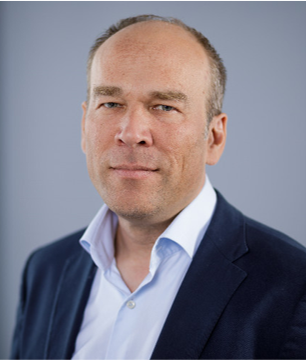
Stefan Pfahl is a senior product strategy expert with more than 20 years of experience in CO₂ reduction, sustainability, electromobility, and powertrain transformation. At Mercedes Benz, he led product strategy for drive systems and CO₂, helping shape the transition toward sustainable mobility. He combines deep technical and strategic expertise to translate regulatory, technological, and market complexity into actionable roadmaps, governance structures, and measurable transformation programs for the automotive industry.
PD Dr. rer. pol. Patrick Jochem
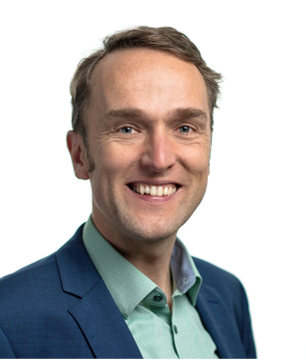
PD Dr. Patrick Jochem is a researcher and lecturer, affiliated with Fraunhofer ISI. His work focuses on energy systems analysis, with emphasis on electric mobility, transport decarbonization, energy efficiency, and quantitative modelling of energy and mobility systems. He contributes to national and international research projects on energy transition, sector coupling, and sustainable transport, and teaches energy economics and mobility-related topics in executive education programs.
Who Should Attend
This course is ideal for:
- Mobility strategists, policymakers, and analysts working on decarbonization.
- OEM and supplier teams assessing drivetrain roadmaps and WtW performance.
- Consultants evaluating market and regulatory scenarios for low‑CO2 mobility.
- Researchers and early‑career academics in sustainable transport systems.
About HECTOR School
HECTOR School, the Technology Business School of the Karlsruhe Institute of Technology (KIT), is a leading provider of executive education in technology-driven fields.
For this course, participants who successfully complete the examination can earn a KIT certificate with ECTS credits, which may be credited toward our Executive Master of Science or Advanced Studies Programs, subject to content alignment.