

Fundamentals of Financial Machine Learning
Certificate Course - Financial Engineering - FE.3.2.I26
| Date | May 31 - Jun 2 and 7 - 9, 2027 |
| Duration | 6 days (Mo. to Wed. and Mo. to Wed. next week) |
| Location | On campus - Karlsruhe |
| Language | English |
| ECTS | Upon request |
| Cost | 2,830 € |

Fundamentals
Understand financial machine learning, time series and cross-sectional models, factor models, and volatility prediction methods.
Technology
Apply Python and algorithms such as ARMA, GARCH, Kalman Filter, and State Space Models to model returns and volatility.
Applications
Develop models for risk premia, asset pricing, and volatility forecasting, using backtesting and machine learning in finance.
What you´ll explore
-
Explore algorithmic and Python-based financial machine learning techniques.
-
Understand time-series and cross-sectional modeling of returns and volatility.
-
Learn ARMA, GARCH, and stochastic volatility models for forecasting financial data.
-
Analyze factor models and their strengths and limitations in asset pricing.
-
Study State Space Models and the Kalman Filter for estimating hidden variables.
-
Discover how machine learning is used to identify risk premia and market patterns.
Your key takeaways
-
Understanding of financial machine learning methods and model selection
-
Ability to apply time-series and cross-sectional approaches to financial data
-
Knowledge of ARMA, GARCH, and stochastic volatility models
-
Skills to use Python for model calibration and financial analysis
-
Competence in applying factor models and evaluating their performance
-
Experience with Kalman Filter and State Space Models
-
Ability to perform cross-validation, backtesting, and hyperparameter tuning
-
Practical skills in risk and asset management using machine learning
Taught by recognized experts in Fundamentals of Financial Machine Learning
Benefit from the knowledge of leading specialists with extensive experience in research and industry. Their deep expertise guarantees a course of outstanding academic and practical quality.
Prof. Dr. Maxim Ulrich
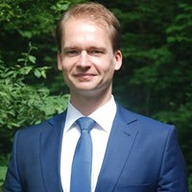
Prof. Dr. Maxim Ulrich is Professor of Risk Management and Financial Economics at KIT and has built an international academic career, including serving as Tenure-Track Assistant Professor at Columbia Business School from 2008. His work focuses on quantitative finance, asset pricing, and financial machine learning, making him a recognized expert in the field.
He brings extensive experience from academia and practice, including fintech ventures and collaborations with institutions such as the ECB and Eurex.
Who should attend
This course is particularly beneficial for professionals in the following fields:
-
Quantitative analysts and data scientists
Professionals building machine learning models for financial applications, such as trading strategies, risk assessment, or asset pricing. -
Algorithmic traders and financial engineers
Professionals in trading firms, hedge funds, or investment banks developing AI-driven trading algorithms or automated decision-making systems. -
Machine learning engineers in finance
Engineers designing, implementing, and deploying ML models in financial platforms, risk management tools, or predictive analytics systems. -
Asset managers and portfolio strategists
Investment professionals leveraging machine learning for portfolio optimization, asset selection, or dynamic asset allocation strategies. -
Risk managers and compliance professionals
Executives and analysts focused on financial risk assessment, fraud detection, or regulatory compliance using ML-based tools. -
Fintech innovators and entrepreneurs
Founders and innovators in FinTech, digital banking, or AI-driven financial products seeking cutting-edge ML applications. -
Researchers and academics in financial AI
Researchers, PhD candidates, or academics exploring AI, machine learning, or data-driven decision-making in finance.
Advance your career with KIT-level expertise
Benefit from the reputation of the Karlsruhe Institute of Technology (KIT) while gaining practical skills, flexible learning opportunities, and a recognized certificate to support your long-term professional growth.
Flexibility
Gain focused expertise in a specific field without committing to a full degree program, allowing you to build relevant knowledge efficiently and integrate learning seamlessly into your professional routine.
Relevance
Benefit from high-quality academic content combined with practical insights, delivered by experienced experts, supporting continuous, lifelong learning while ensuring direct applicability in real-world scenarios.
Advancement
Enhance your professional profile with a recognized certificate, demonstrating your commitment to ongoing development and supporting your career with tangible, verifiable credentials.